




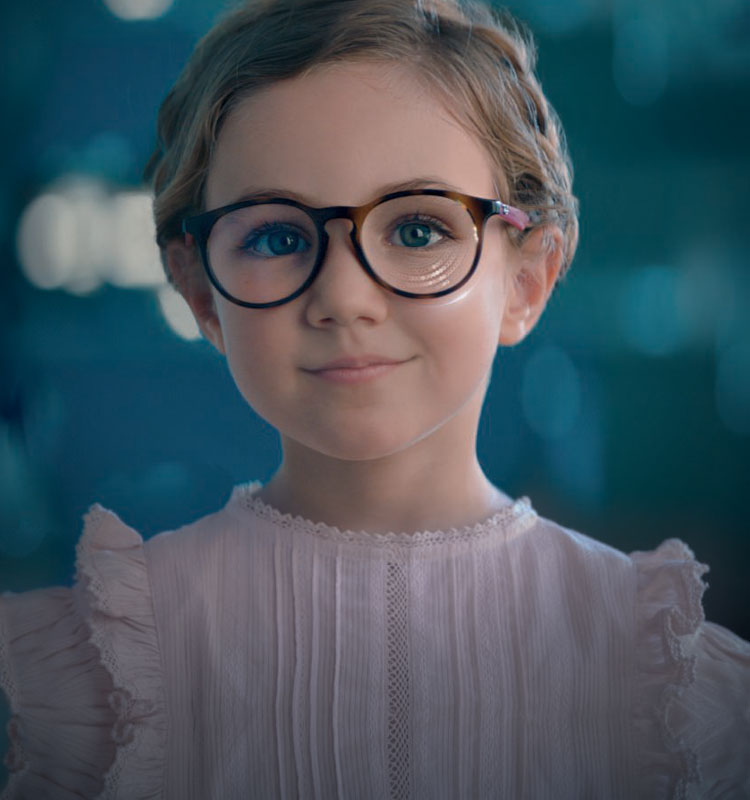

Essilor Stellest lenses now at ClearVue Eyes.
Glasses That Do More Than Correct Vision — They Fight Myopia
Imagine if a simple pair of glasses could do more than just sharpen your child’s distance vision. What if — instead — those glasses could help slow down the very progression of nearsightedness, reducing the risk of serious eye problems later in life? That’s no longer science fiction. With Stellest lenses, eyeglasses become a proactive treatment, not just a reactive fix.
As rates of childhood myopia climb — fueled by increased near-work, screen time, and less time spent outdoors — the need for effective, low-risk, long-term myopia control has never been greater. Enter Stellest: the first spectacle lens approved in the U.S. to slow myopia progression in children.
What Makes Stellest Different: Science + Smart Design
At first glance, Stellest glasses look like ordinary prescription eyewear. But inside the lens lies a subtle, powerful difference: a design engineered to influence eye growth.
- The lens features a clear central zone (approximately 9 mm in diameter) for sharp distance vision — just like traditional single-vision lenses.
- Surrounding that central zone are 11 concentric rings containing more than 1,000 tiny aspherical “lenslets”.
- These lenslets create a subtle pattern of myopic defocus (i.e. focused “signal” in front of the retina) which appears to slow the axial elongation of the eye — the key structural change that drives worsening myopia.
In short: Stellest doesn’t just help children see clearly today — it influences how their eyes grow, potentially reducing future risks.
The Evidence: Clinical Trials & Long-Term Results
The efficacy of Stellest isn’t hypothetical — it’s backed by robust clinical data:
- In a pivotal two-year randomized trial, children wearing Stellest lenses experienced a 71% reduction in myopia progression compared to those wearing standard single-vision lenses.
- Over the same period, their eyes grew significantly less: axial elongation was reduced by 53% compared to controls.
- Long-term follow-up studies are equally encouraging. A five-year study found that children wearing Stellest had on average 1.75 Diopters less myopia progression and 0.72 mm less axial elongation than predicted had they worn regular lenses.
- More recent six-year data (2025) confirms sustained effectiveness: Stellest wearers had about 1.95 D less myopia progression and 0.81 mm less axial elongation, significantly lowering their risk of high myopia compared to uncorrected controls.
- Importantly, studies examining visual function — distance and near acuity, contrast, binocular vision — found minimal compromise compared to standard glasses.
Collectively, that’s compelling evidence: Stellest isn’t a marginal tweak — it’s a major step forward in pediatric eye care.
Who Should Consider Stellest — And When
Stellest is designed primarily for children aged 6 to 12 at the start of treatment.
It’s particularly worth considering when:
- A child has newly developed myopia and is at risk of rapid progression.
- Contact lenses are not appropriate (too young, risk of infection, difficulty with hygiene). management option — a “set it and forget it” solution that doesn’t require nightly drops or special care.
- The goal is long-term eye health: slowing myopia progression now can reduce risk of high myopia and associated complications (retinal detachment, glaucoma, other structural eye issues) later in life.
That said — because efficacy depends on consistent use — the lenses should be worn full time (ideally 12+ hours per day), every day, for the best results.
Why This Matters: A New Era in Vision Care
For decades, eyeglasses have been a passive tool — a way to correct blurry vision. But with Stellest, glasses become active tools for preserving eye health.
Given how common myopia has become worldwide — especially among children spending more time indoors, doing near-work, or on screens — interventions like Stellest could dramatically shift the odds in favor of healthier, more stable vision into adulthood.
From a public health perspective, this could mean fewer cases of high myopia, reduced incidence of associated complications, and a lighter burden on eye care systems. From a parent’s perspective — peace of mind, and a proactive way to protect their child’s vision over the long term.
What to Do Next: Questions Parents & Eye-Care Pros Should Ask
If you’re a parent suspecting your child’s myopia is getting worse, or simply want to be proactive:
- Consult with ClearVue Eyes about whether Stellest lenses are appropriate for your child.
- Ask about wearing habits — consistent, full-time wear increases effectiveness substantially.
- Monitor how your child adapts — while many children adjust within a short period, some may notice slight changes (e.g., peripheral blur or mild visual artifacts) at first.
- Consider this as part of a long-term myopia management plan — especially if your child is very young or shows signs of rapid progression.
Conclusion & Call to Action
If you’re concerned about childhood myopia, the arrival of Stellest is big news. It’s a scientifically backed, FDA-authorized, real-world solution that promises to do more than restore clarity: it helps shape healthier eyes for life.
If you believe your child could benefit from Stellest — don’t wait. Reach out To us at ClearVue Eyes today, and ask whether Stellest is right for them and explore incorporating myopia-management lenses into a long-term eye-health strategy.
Because with Stellest, the future doesn’t just look clearer — it looks brighter.
Learn more about Stellest lenses At this link – https://www.essilor.com/us-en/products/stellest
With Essilor Stellest Lenses Now Available at ClearVue Eyes don’t wait to learn more.

